Co-Pilot vs Auto-Pilot: when to let AI act vs when to approve first

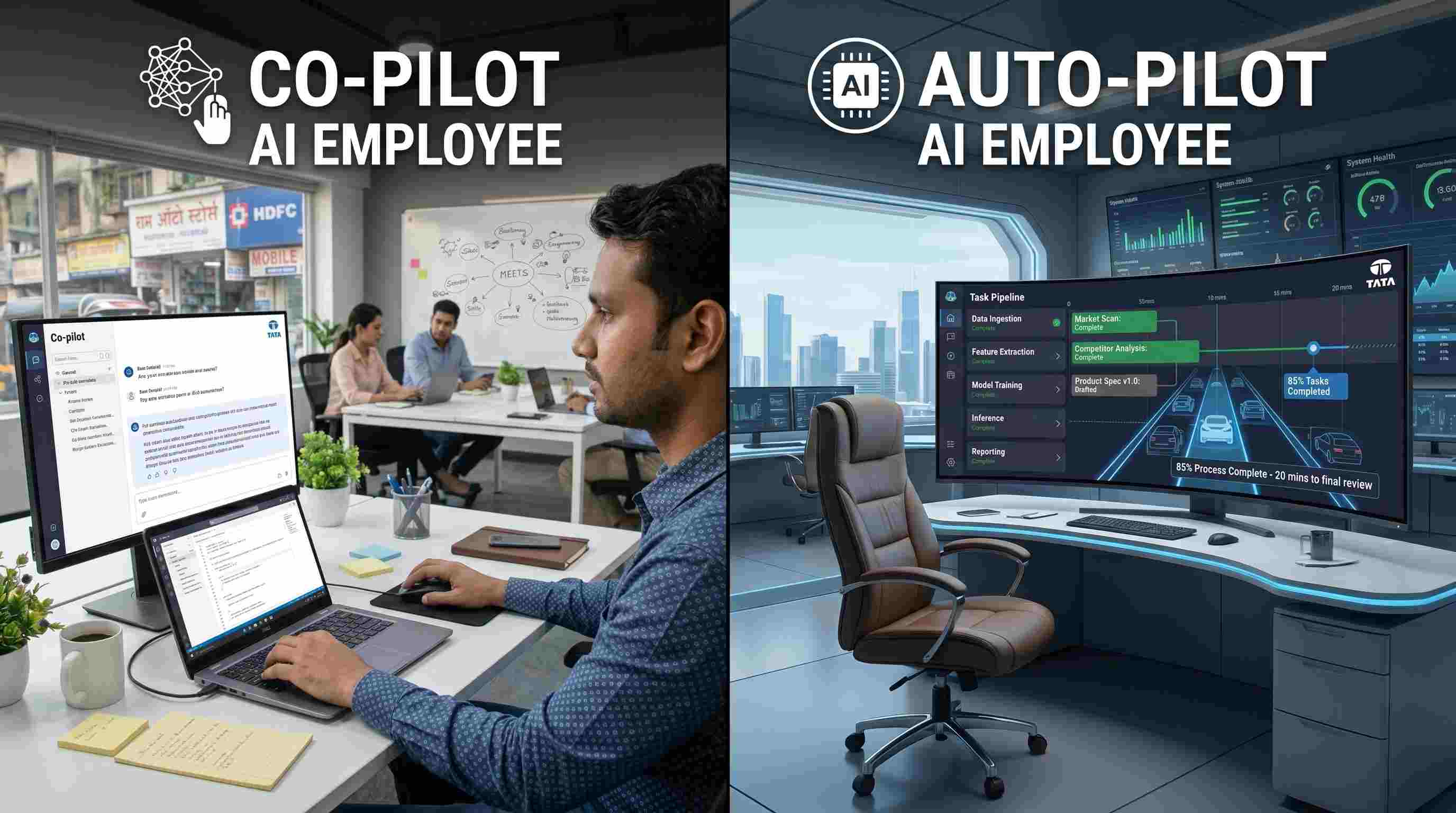
As businesses race to integrate artificial intelligence into their daily workflows, the debate is no longer about whether AI is capable of executing business tasks. Instead, the critical strategic challenge is governance: How much autonomy should you give your AI employees? At QBIQAL, we believe that deploying AI shouldn't be an all-or-nothing gamble. That is why we designed our platform around two core operating states: Co-Pilot (human-in-the-loop review) and Auto-Pilot (fully autonomous operation under strict guardrails). Understanding when to apply each mode is the difference between a highly successful deployment and a public relations or financial disaster.
Deconstructing the Autonomy Dilemma
When a company hires an AI agent to write emails, draft code, optimize pricing, or speak to customers, the agent must make decisions. In a traditional software environment, these decisions are governed by rigid IF/THEN rules. In an LLM-powered environment, the decisions are probabilistic.
This probabilistic nature gives AI its power—it allows the agent to handle messy, unstructured real-world requests. But it also introduces risk. If the AI agent is left entirely unchecked, it could theoretically authorize a refund to a fraudulent customer, publish an inaccurate marketing claim, or misallocate advertising budget.
To manage this risk, we created a framework based on task severity and Cortex system confidence. By routing decisions based on these two axes, businesses can scale operations safely.
When to Use Co-Pilot Mode (Review First)
Co-Pilot mode acts as an drafting and recommendation layer. The AI employee does 90% of the work—gathering data, performing analysis, writing the initial draft, and proposing the next action—but it cannot execute the action until a designated human manager reviews and approves it.
We recommend maintaining Co-Pilot mode for the following scenarios:
- High Financial Exposure: Any action involving transactions above a certain threshold (e.g., custom enterprise discount rates, refund processing, procurement approvals).
- External Communications with High Brand Sensitivity: Drafting press releases, responding to sensitive customer complaints, or communicating with major strategic partners.
- Critical Data Operations: Overwriting master database schemas, deleting bulk records, or modifying pricing configurations globally.
- Early-Stage Deployments: During the first 30 days of hiring any new Qbiqal AI employee, to train the model on your brand voice and internal protocols.
Defining Autonomy Guardrails
To configure these rules, QBIQAL developers write simple, declarative guardrail policies in the tenant settings. This policy schema evaluates incoming requests and determines if human review is mandatory. Here is an example policy configuration:
policy:
  name: outbound_outreach_limits
  agent: "LeadGen AI"
  rules:
    - action: send_email
      conditions:
        - match_type: regex
          field: recipient_domain
          exclude_list: ["gov.in", "nic.in", "competitor.com"]
        - value: confidence_score
          operator: GTE
          threshold: 0.90
      routing:
        success: AUTO_PILOT
        failure: CO_PILOT_REVIEW
When to transition to Auto-Pilot (Autonomous Execution)
Auto-Pilot mode allows the AI employee to work independently, completing cycles of analysis and execution directly. This is where true operational scale is achieved. When an AI employee operates on Auto-Pilot, it can run thousands of micro-tasks per minute, responding to client queries, updating CRM fields, and monitoring systems while your human team sleeps.
Transition to Auto-Pilot when:
1. The task has low financial and operational risk (e.g., booking a meeting room, assigning a lead category, cleaning email formatting).
2. The system has historical performance data showing a 99%+ accuracy rating during its Co-Pilot phase.
3. The task requires instant response times (e.g., answering live support chat, dynamic room rate adjustments).
By setting clear upper boundaries (e.g., "Leona can auto-schedule appointments but cannot change service rates"), you can let the AI work at speed without sacrificing security.
Concluding Thoughts
A smart AI strategy starts with safety. By utilizing QBIQAL's Co-Pilot mode to build trust and gather human feedback, and then moving to Auto-Pilot for repetitive, high-speed tasks, Indian businesses can adopt AI without taking unnecessary operational risks.
Deploy AI Workforces in Your Operations
QBIQAL provides robust, compliant, and ready-to-work AI specialists that interface with your booking, sales, and analytics systems seamlessly.